
Upper School
Spring: 13 March to 4 June 2027 · Fall: September 4 - November 27
Ages 11 through 16 · 56 total students, 15 Tween & Teen Spots Remaining
A Homebase for Traveling Teens
“the kids were as happy as they could ever be”
The only worldschool program that offers tweens and teens:
A robust, ongoing peer group of 26 tweens and teens
Multiple faculty members and courses designed for adolescents
Well-documented project-based learning with real community impact
Year-round studies with a route to a diploma if desired
Freedom in a small town where people look out for them
For homeschoolers, days when you’re no longer the only teacher
Mission & Values
The Field School of Hvar was founded in 2024 to bring families together in service of a local community and landscape. Our premise is that service to something beyond oneself is the foundation of a meaningful life and a sustainable society. Our goal is to equip young people with the grounding and competence to thrive in an uncertain future.
"If we wanted the normal system, we'd stay at home."
What does our school mission and structure mean for teens and tweens?
Challenge. Young people at The Field School take on complex projects with measurable, public outcomes. We believe that tweens and teens are capable of doing hard things and benefit from ‘rites of passage’ in which they move from doubt to self-confidence through effort.
Responsibility. Tweens and teens at The Field School of Hvar will encounter people and situations that do not align with their own values. Our goal is to prepare young people for reality rather than to shield them from it. We embrace these moments as opportunities for learners to build self-awareness and integrity within a safe and caring setting
Evolution. The Field School of Hvar is an experiment for people who feel that the standard approach to education and life is not working. As an innovative program, we are constantly examining our approach. When something is not good, we change it. This offers parents and kids a unique opportunity to create and be heard, but also requires adaptability.
Accountability. Jelsa is a small community. We all see a lot of each other, even aspects of our character that we might prefer to keep private! This is part of village life, which can be incredibly rewarding if it is approached with cheerfulness, patience, and a high standard of personal conduct.
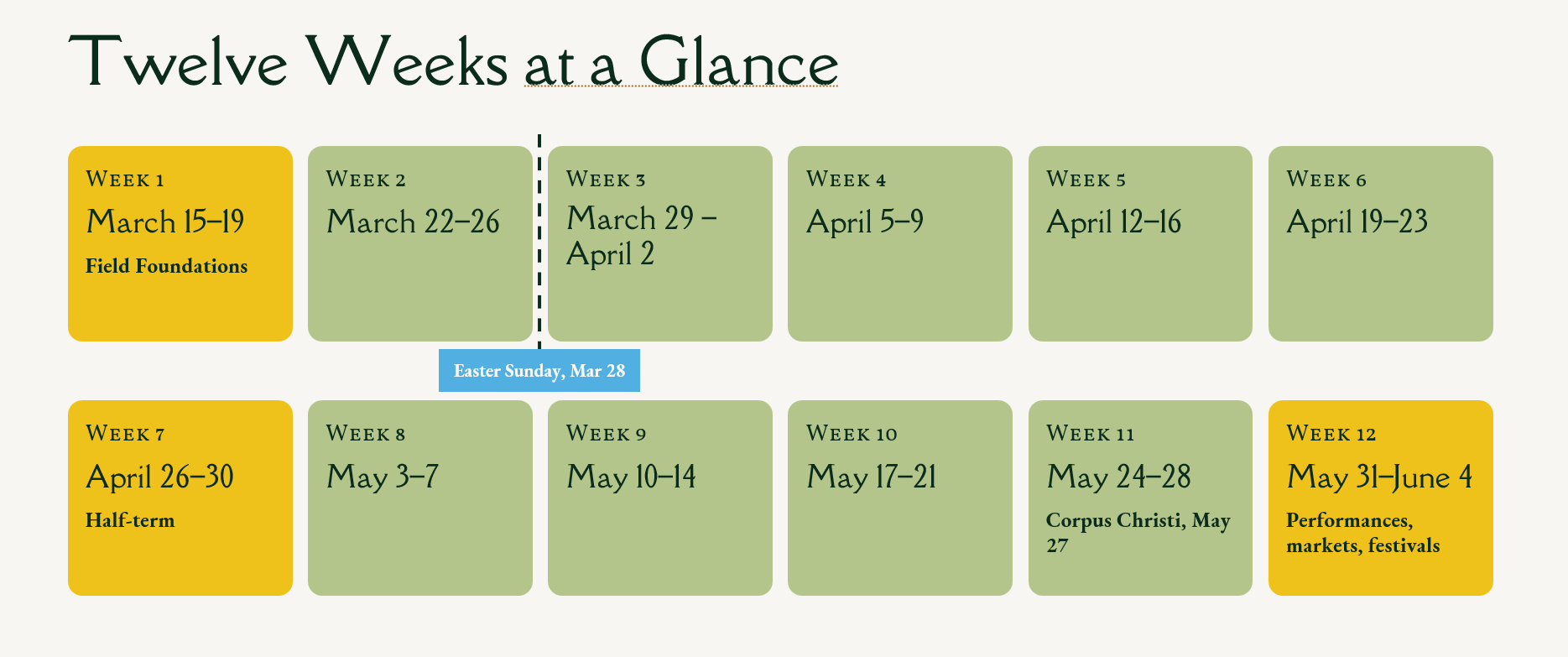
Weekly Schedule & the Spring Term
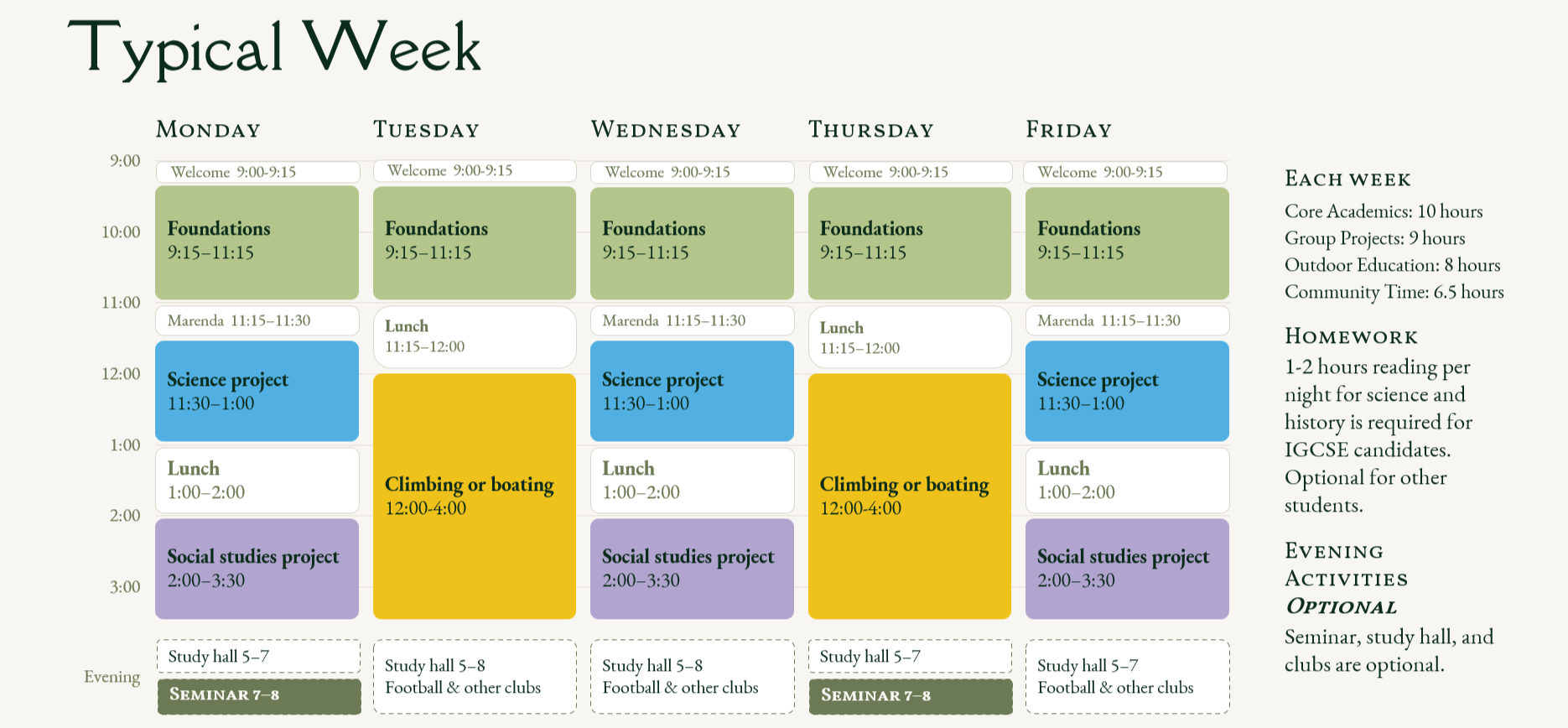
Lower and Upper Secondary are together for Foundations and outdoor education. They are separate for Impact Projects and Lunch. Lower Secondary will have Science first; Upper Secondary will have Social Studies first.
Project-based Learning
Meaningful Work
Flipping the cliche that those who cannot do, teach, our Guides lead with hands-on expertise and hard-earned leadership skills. They are chefs, farmers, architects, and guides who bring passion and achievement to learners.
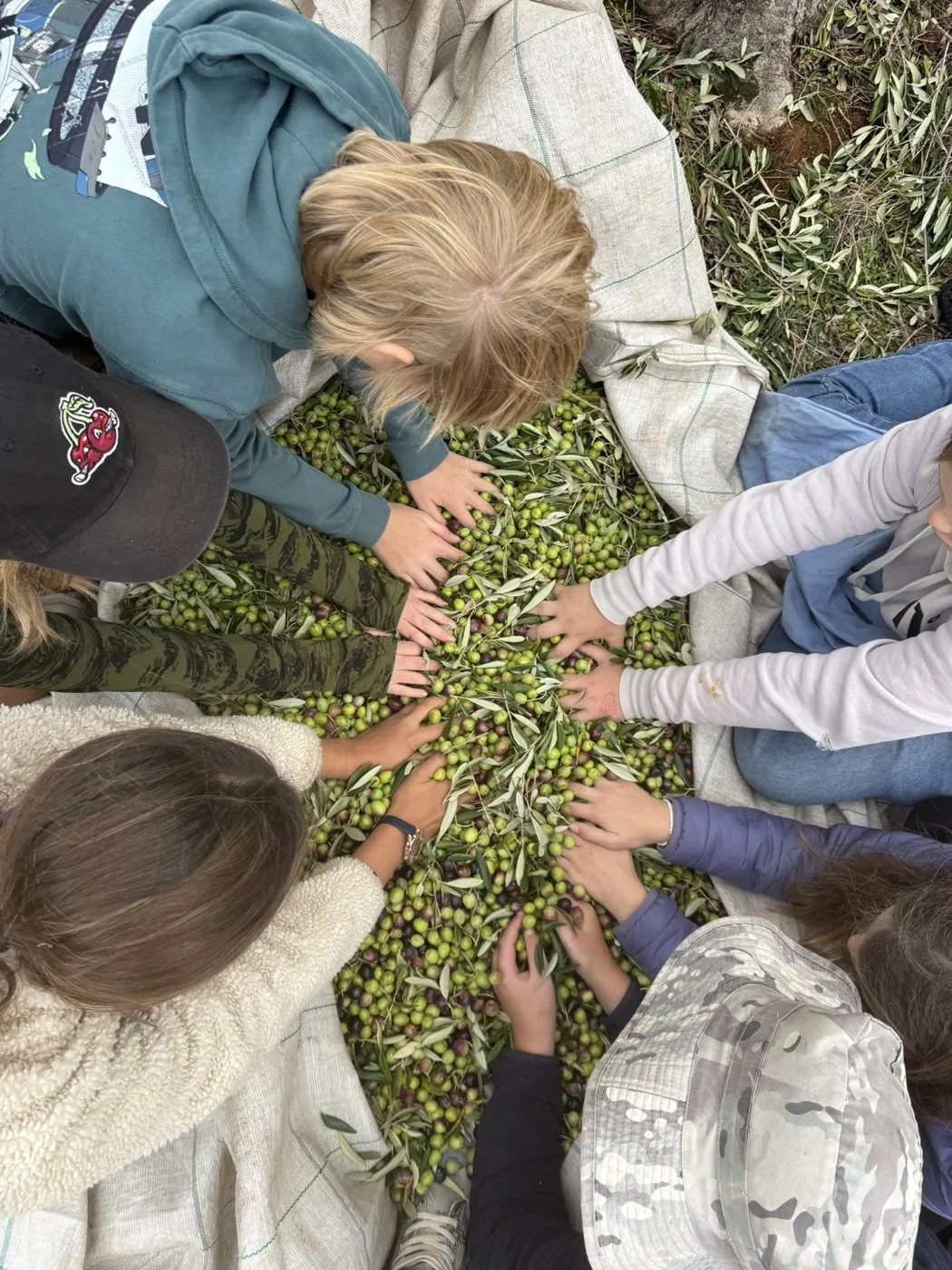
Science and Social Studies are where core skills meet real world possibilities and problems. Every learner takes on two impact projects this spring, one in each discipline. All projects begin by inviting kids to understand and care about a crisis in our community. Over the course of the term, learners acquire knowledge and habits to make a powerful difference.
In the spring, our focus science is Biology and our chapter in history is the Roman Empire.
School Canteen: open a locavore cafe with a Field School dad who is a genetic biologist and zero-kilometre baker.
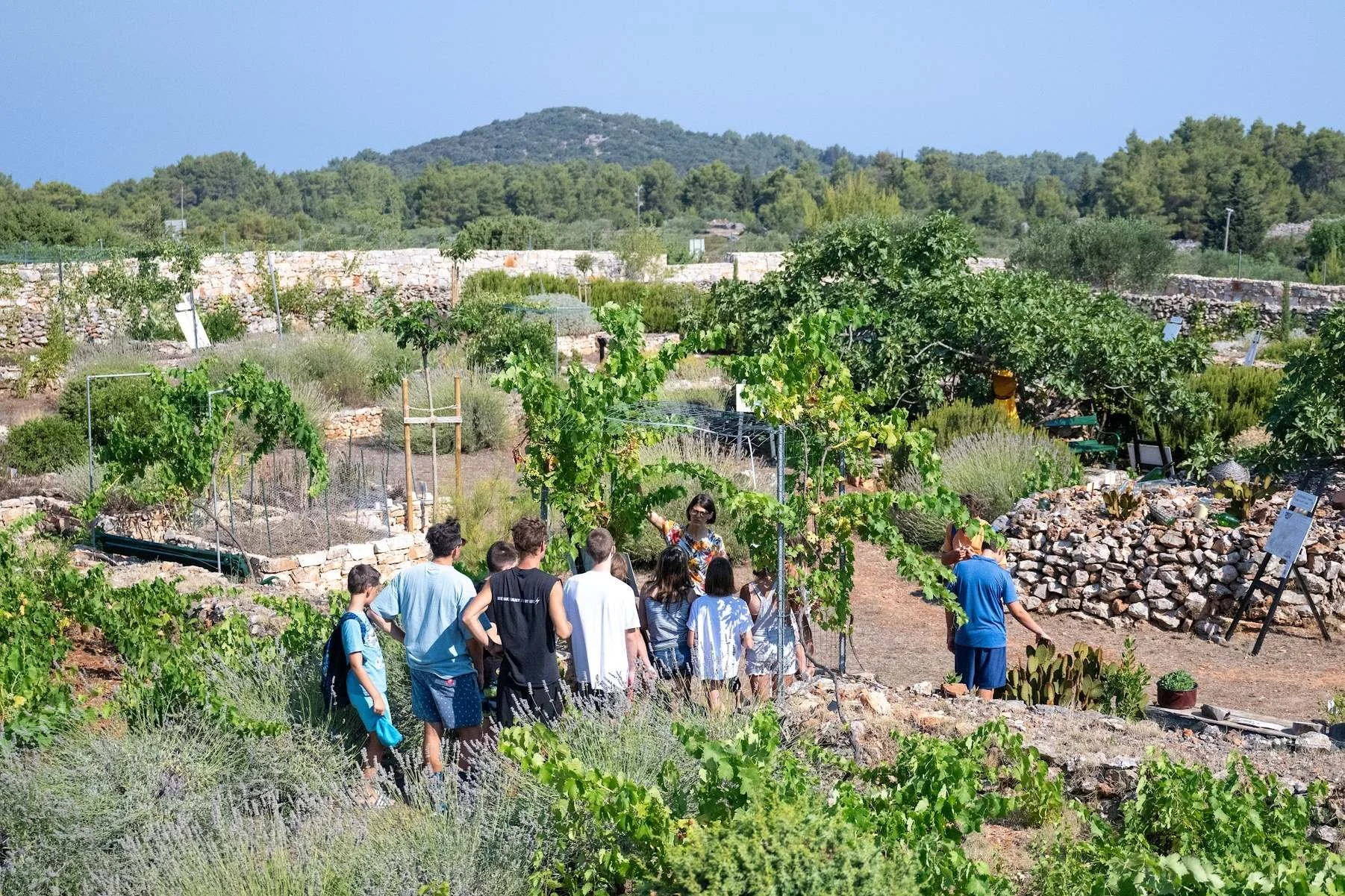
Community Garden: build a teaching garden for our town with a climate scientist, community architects, and Croatian peers.
Living History: bring Hvar’s ancient, UNESCO-listed landscape to life with a historical re-enactor and a local association for experiential history.
Field Store: help open Hvar’s first thrift shop and mending studio with our Zero-Kilometre clothing project.
Outdoor Education
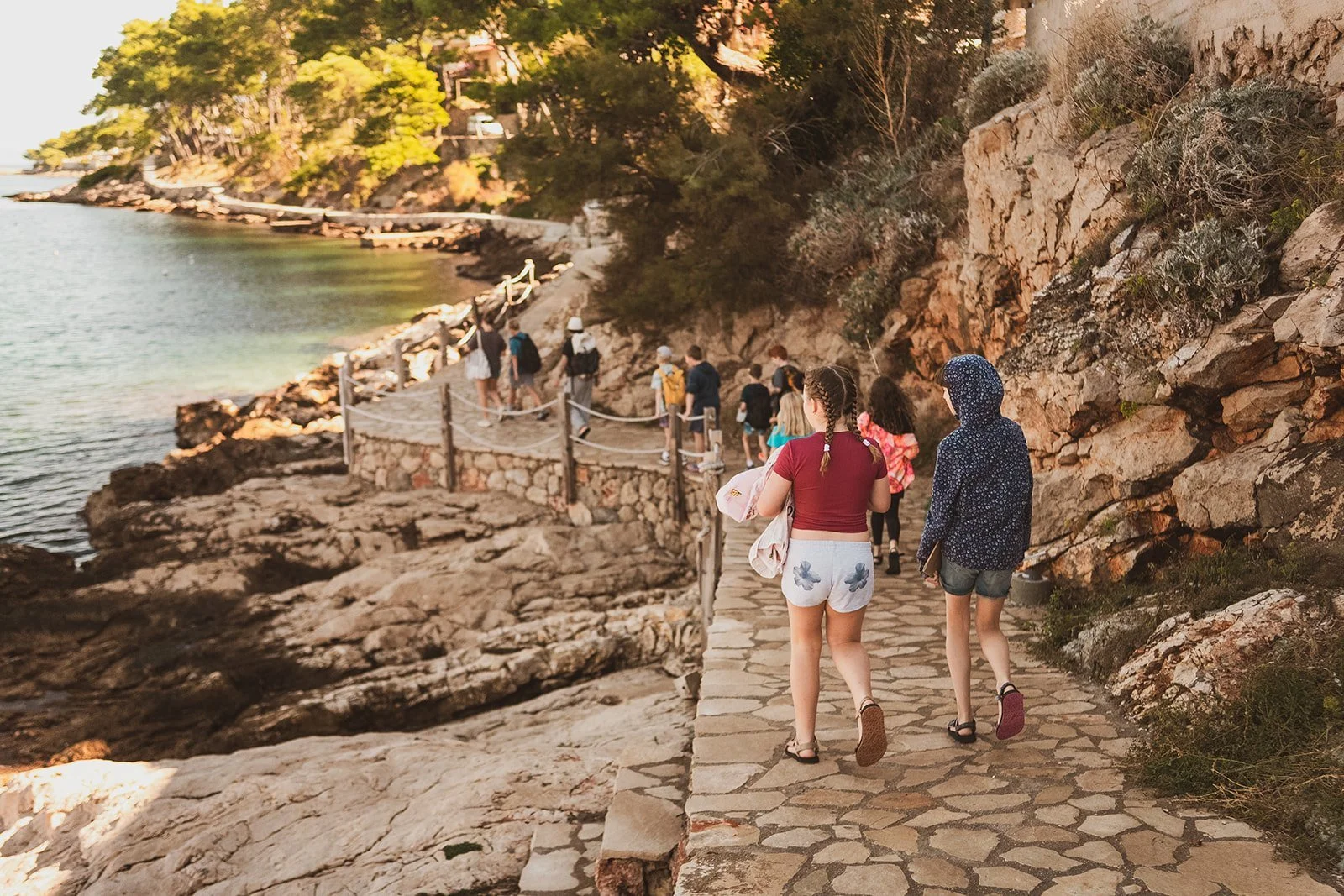
Two afternoons each week are spent building physical wellness and a personal relationship with our island landscape.
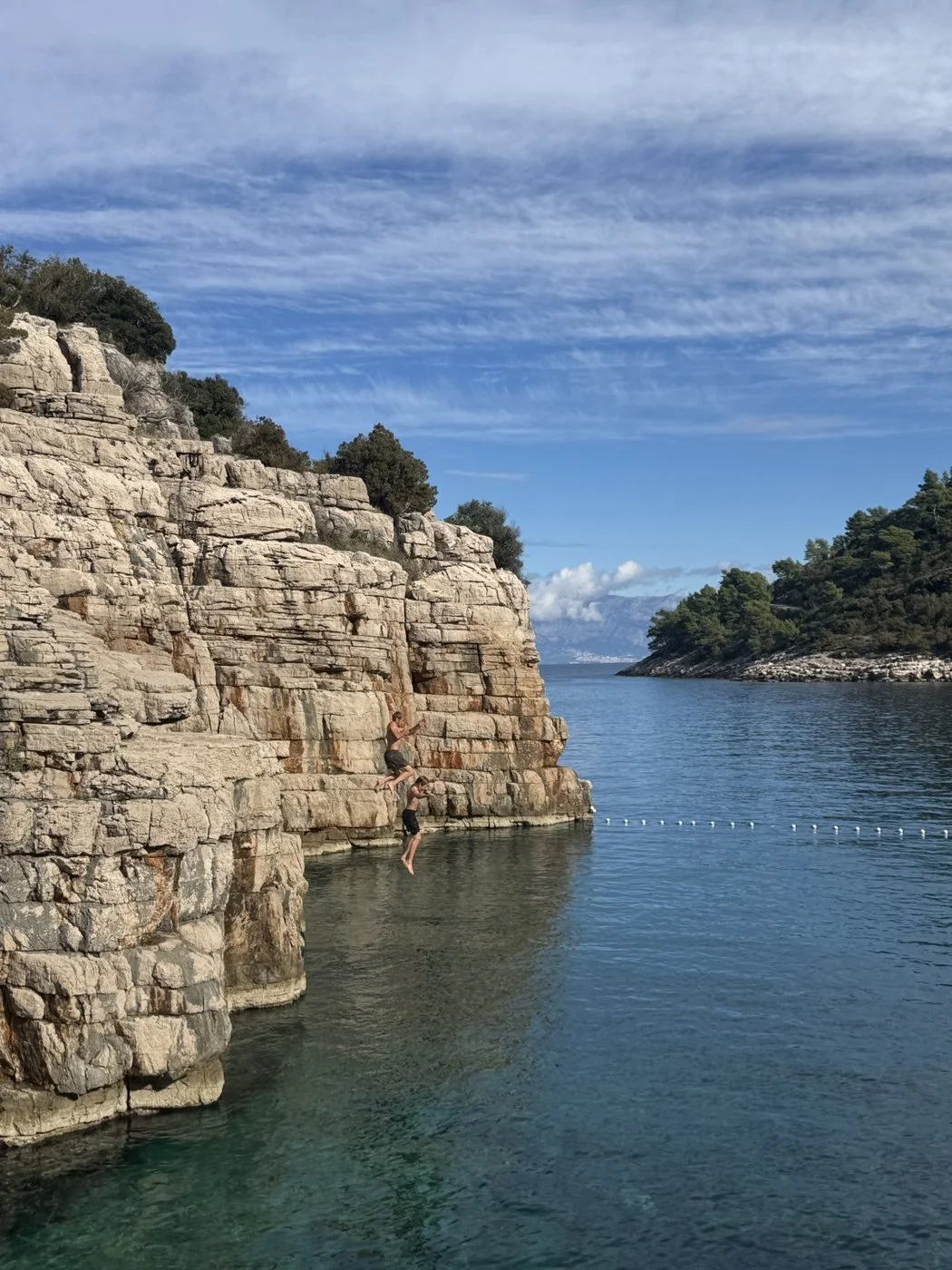
Climb and belay on Hvar’s limestone cliffs
Behind the turquoise shore, Hvar rises into ridges, sea cliffs, and karst trails. Three professional climbing guides cultivate safety, strength training, and fun. Each week alternates between a climbing gym and the rock. Learners an earn a belay certification and may be able to help host the Hvar Climbing Festival in May.
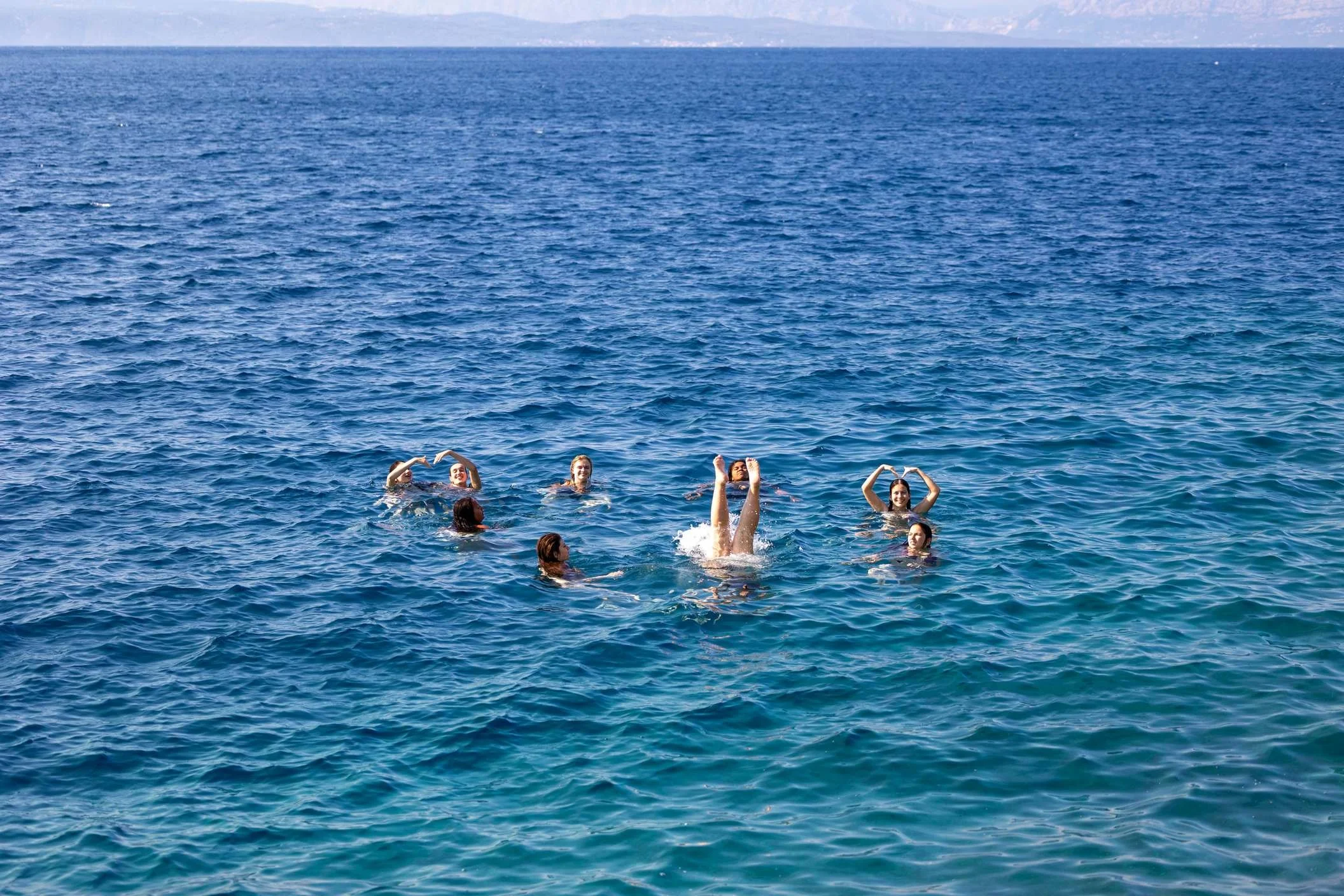
Learn to handle a boat, read the weather, and catch your own fish
Twice a week, learners take a 50 HP powerboat out across Stari Grad Bay. They learn to look after a boat, the rules of the sea, and how to read the weather, along with marine biology and how to catch and clean a fish. Learners aged 16 and over can work towards a skipper’s licence or an equivalent, for an additional fee.

Academics
Every morning starts with Foundations: two hours to build muscles that power all the real world work they do.
40-minutes each for Math, Literacy, and Leadership
3 readiness bands, based on math level. A Learning Passport that lets learners see their progress skill by skill. Monthly opportunity to switch bands.
Math ranges from arithmetic to Algebra.
Literacy centers on comprehension and grammar.
Leadership offers practical skills for planning, communication, conflict, and self-awareness.
Guides offer tutoring and a welcoming space for further work during an optional Study Hall in the evening.
Students enrolled for more than one term at Field continue to study remotely with our math and literacy Guides if they choose.
Proof of Learning
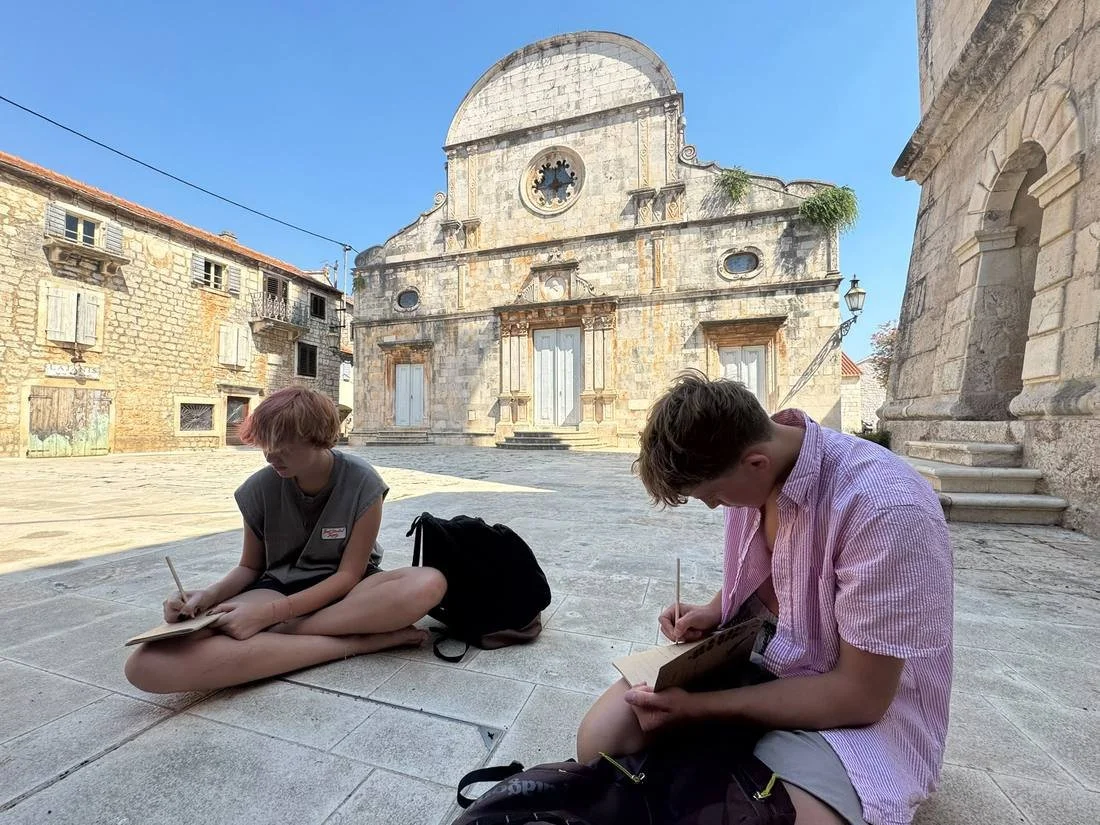
Field doesn’t assign grades. Learners demonstrate mastery in other ways:
Performances. A school play or community banquet. A pop-up market or live debate. Public showcases provide accountability and excitement.
Portfolio. To complement demonstrations, each learner builds a portfolio of pieces of work which lead up to a final product or presentation.
Documentation. A syllabus, daily recaps, and weekly agendas make students’ experience visible and alternative transcripts easy to build.
Micro-credentials. Opportunities to earn pre-professional certifications in skills like skippering or permaculture build post-secondary pathways.
IGCSE Option
Families seeking a transferable record of secondary school learning can do so through the Cambridge IGCSE system. Field’s programme lines up with Cambridge syllabi. Students have the option to sit for exams as “private candidates.”
Learners on the IGCSE track are expected to read for one to two hours a night during the term and to complete knowledge checks such as quizzes. Topics not covered in spring can be picked up in winter and summer study pods, with tutoring and guidance from Field. An additional online school should not be necessary. Field is working towards Cambridge affiliation and accreditation, which may take a year or two. In the meantime you’ll get a checklist of the curriculum covered.
Community
Safety and Independence
Jelsa is a small town with many young families and almost no crime. Teens here have the freedom here to explore, connect, and grow. Importantly, The Field School community is mostly screen-free. There are no personal devices allowed in the program. Young people only share them outside of school with parental permission. There is virtually no gaming or social media use in our current group of teens.
The Upper School sits in a 250sm makerspace in the centre of town, which we use as a platform for public workshops and service. Nearby is the nascent community garden, a large field which we are activating in partnership with our local public school, as well as our Lower School and Community Lounge. Our town also boasts a rowing club, gym, indoor sports facilities, an attractive public library, and a municipal hall which we sometimes use for drama performances.
We spend our first week of the term together, building trust, friendships, local knowledge, and shared expectations.
Friends who stay
Twelve weeks is long enough for real friendship, and for the friction that comes with it. We plan for both. Each learner joins a House, a mixed-age group built around their project, and Big Buddies pairs families across the ages for outings and check-ins.
Teenagers also work beside young people from Jelsa on projects like the community garden, which is how friendships across countries get started. We help older children talk through conflict (and things like dating!) before either comes up.
“I think he’s learned a lot about human nature by being with a group of teenagers that he is really getting to know quite well.”
Parent of a 12-year-old at Field, autumn 2026
"Do I matter? What do I look like? Who's my friend?”
Tuition
What’s Included
Daily academics and tutoring with a portable “Learning Passport” and IGCSE preparation, if desired
Project-based learning with expert practitioners and robust materials for well-designed community impact
Outdoor education: either rock climbing or boating and fishing
Community programs, including a week-long orientation, family outings, seasonal festivities, and end-of-term celebrations
The Fee
€3,600 per child for twelve weeks.
€6,100 per child for two sessions (24 weeks in-person, plus 12 weeks remote)
Lunch isn’t included. A few extras, like a skipper’s license, carry a fee. These items are always disclosed and optional.
15 of the Upper School’s 26 spots are still open.
"massively positive
for our whole family"
Questions parents ask
Will my teenager fall behind?
Our program keeps learners on track with grade-level academics and diploma requirements. However, because Field is a small program located in what is, for our families, a foreign country, children will not have the resources as a large school or town in specific areas. For example, there are limited options for elite youth sports in English, computer science, foreign language, or the arts.
Will I still be my child’s teacher?
No. But as described above, if your child wants to keep up with an instrument, language, or other passion, they may need support outside of our program.
What do you ask of parents?
Remember that every tween and teenager is still learning social and emotional skills, and work with the school’s process for behaviour and conflict. Beyond that, come and join in! This is is really a family experience. Parents are expected to join the Monday announcement meeting, plays and markets, and the governance meeting every two weeks. Beyond that, rich and rewarding engagement at Field begins with getting to know other parents and neighbors: host a coffee, teach yoga, or run a game night. Share your skills and make the most of this island.
Where will we live?
Families find their own housing. Returning families are glad to share what they know. There are some villas available at the Fontana Resort and many families rent in town.
Do we need a visa?
Generally, no. Our term fits within the 90 day visit which most visitors have in the Schengen area. Days in other Schengen countries count too, so check the rules for your own passport. If you plan to stay in Schengen for longer than 90 days, you will need to apply for temporary residence. More info here.
How do we get to Jelsa?
Fly to Split, then take the ferry to Hvar. The passage takes an hour or two. More info here.
Can older teens come back in summer?
Teenagers 14 and up can join Field as Junior Guides in summer, helping with younger learners. It’s free, and we recommend staying a month. More info here.
"everybody actually seems engaged"
"an incredible experience"
"lots of adults in their lives that they are
learning fromand looking up to"
"you don't have to live in
the world that's presented to you"