
A training ground for climate leaders.
The Field School of Hvar exists to graduate young people equipped to face the crisis of their generation with vision, skill, and fortitude. Just as there are conservatories for musicians and trade schools for carpenters, Field is a program dedicated to supporting vocations of service.
Climate stewardship is the throughline of our academic program. It begins in early childhood by building comfort and intuitive knowledge of the outdoors. Elementary school aged children acquire literacy and numeracy alongside a deep, factual familiarity with the history and inner workings of our world. Adolescents begin the long process of uncovering their unique contribution to our common home through copious skill-building delivered in the context of increasingly ambitious and independent impact projects. Just as the climate effort is multi-faceted, so is our program interdisciplinary. As children grown older and gravitate towards different subject areas, they will center on one of three basic service tracks: politics and advocacy, science and engineering, or entrepreneurship and business.
Academics

APPROACH

At The Field School of Hvar, our island is the classroom.
Education is often framed as a trade-off between skills and well-being: recess versus readiness. At The Field School of Hvar, we believe that children learn best when all of their capabilities are activated. The Field School of Hvar offers classical education through an inquiry-based framework in constant dialogue with real meaning in the world through service projects. Whenever possible, our lessons take place outdoors, drawing on the surrounding landscape and culture.
Classical education describes a systematic approach to learning organized by the chronological story of human civilization. The goal of classical pedagogy is to raise critical thinkers who have a solid factual basis for interpreting new information, robust foundational skills in literacy and math, and a coherent conceptual framework for making sense of the contemporary world.
Inquiry-based education is simply learning that listens to a child’s curiosity. Within any topic of study - water cycles, for example - one learner may want to know everything about aqueducts; another may want to know how meteorologists predict the weather. An inquiry-based framework provides teacher training and instructional time to center those questions, so that children have the support to feel ownership over their education. The International Baccalaureate (IB) is a well-established approach for inquiry-based learning. Field pulls ideas and faculty from that system.
Service projects are where students put learning into practice: finding meaning, developing critical soft skills, and cementing understanding. Project-based learning offers an authoritative answer to the question: “when will I ever use this?” Students can feel that school is not a game, but a training center to build skills that are useful to others.

TYPICAL DAY
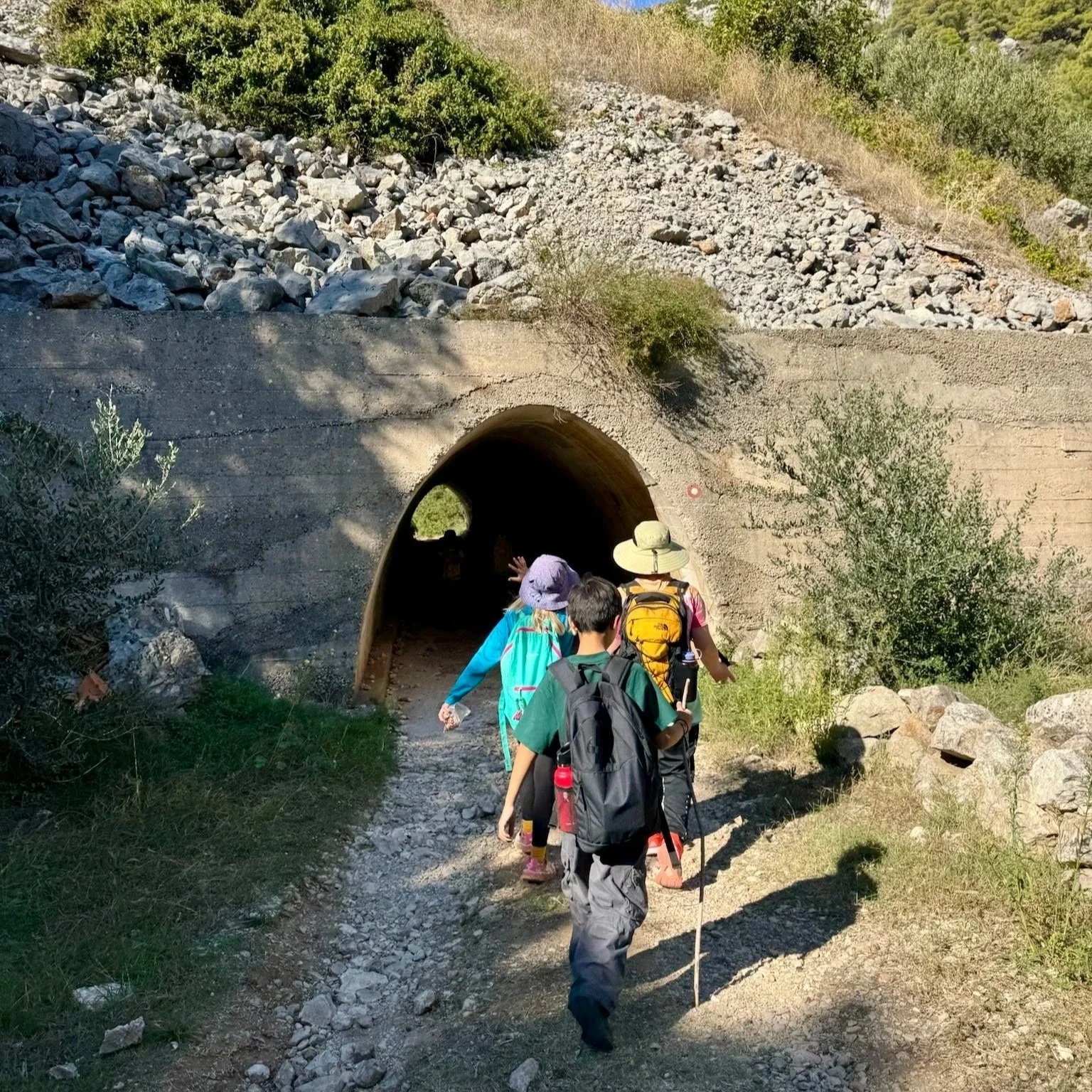
A typical day begins at 9am in grade groups to check-in and review the day ahead. Students then break into sections of ten students or fewer for math and language learning, which is the focus of the morning. These groups are organized by ability rather than age to better support students who need acceleration as well as additional review.
Numbers and letters are the language of thought. It is the essential duty of a school to ensure that children have strong numeracy and literacy so that they can pursue their passions and goals, wherever those take them. We teach both disciplines as integrated subjects, emphasizing the real world application and conceptual underpinning that make practice and memorization rewarding. Preschool and Kindergarten students learn these skills outdoors, using a curriculum called Wild Learning. Children in primary school use demonstrations and manipulatives; stories, games, and activities that tie in history and science concepts; and real problems connected to their projects. Children ages ten and older spend a growing amount of time in direct instruction, independent reading, and original writing. A day will often begin in front of a blackboard, but the majority of the morning is spent in dialogue and practice outside.
At noon, students pause for a simple, healthy lunch and additional Croatian language practice, either in our learning center or outdoors.
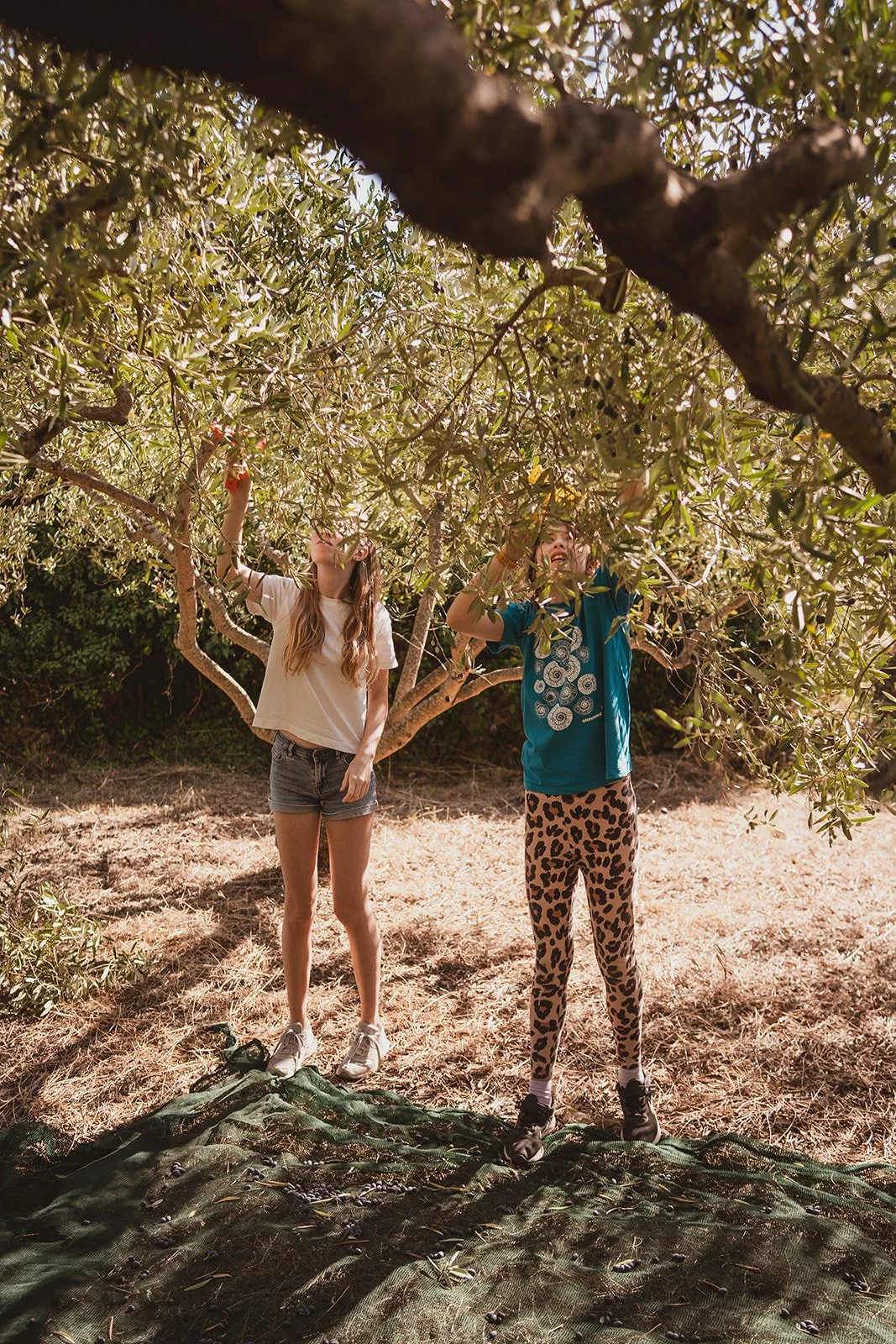
The afternoon flows into project work or experiential learning. Service projects take place in student-selected groups of 3 to 5 learners. They begin with a challenge or prompt, such as designing a system for upcycling old clothes or comparing different composting techniques. Challenges integrate science and the humanities. Educators scaffold soft skills and reflection that are essential to successful project-based work; parent volunteers may also support by teaching hard skills related to a specific project.
The afternoon is also a time for students to dive deeper into science or social studies topics of personal interest with faculty support; to visit museums and cultural sites; and to participate in outdoor activities that may be hard to schedule at other times, such as sailing and mountaineering.
The school day ends at 4pm. After school, children have several choices for enrichment: clubs associated with The Field School of Hvar, like theater or robotics; extracurriculars that take place in the local community, such as rowing, mountain biking, dance, and football; or private lessons in language or a musical instrument.
In the Mediterranean, every herb has a story. Every rock has lived a hundred lives. By approaching the world as a classroom, our students unlock a lifetime appreciation for the wondrous intellectual content of life itself, from a walk in the woods to a meal shared with friends.

ASSESSMENT &
ACCREDITATION
The Field School of Hvar is an experimental school. Experiments need testable hypotheses! It is essential that all stakeholders have clarity on how well the program carries out its core duties: to provide a safe, nurturing environment in which children acquire foundational skills.
Children take placement assessments when entering The Field School and periodically thereafter. Results are shared with teachers, parents, and administrators - not children. These are not tests to study for or grades to index against, but check-ups to ensure that learning is taking place.
It is important that all stakeholders, especially children, feel a sense of accountability with their day-to-day learning. Extracurriculars like sports and theater create urgency without using quizzes and graded assignments. Our approach is similar. Children are expected to frequently demonstrate their learning in front of peers, in mildly competitive settings, and in their projects, which have real-world stakes. This is a change of pace for many learners, and challenging in its own way. Managing goals and growing from failure are critical skills in their own right, which teachers support as a core part of our program.
Additionally, educators document student inquiry and projects extensively, drawing on assessment frameworks used in the International Baccalaureate system and other inquiry-based frameworks. Regular meetings between parents, teachers, and the learner help support clear communication around strengths and affinities, as well as areas for additional focus.
The Field School of Hvar is pursuing microschool accreditation through international standards body WASC. Accreditation is essentially a 3rd party audit, ensuring that a school has strong processes around safe-guarding, administration, and education.

FACULTY

The Field School of Hvar will be taught by professional, licensed teachers with experience and training in inquiry-based, project-based, or classical education. Since 2026-27 will be our first year as a full microschool, we will build our team based on the children who are enrolled (more about class size here). Assuming full enrollment, we will hire:
A head of school
A preschool teacher
A kindergarten teacher
An early elementary teacher
A math and science teacher for ages 8 through 11
A language and humanities teacher for ages 8 through 11
A math and science teacher for ages 12 through 15
A language and humanities teacher for ages 12 through 15
In line with inquiry-based pedagogy, there are some opportunities for older students to tutor younger students, which can be a powerful way to reinforce knowledge for both students. Additionally, The Field School works with instructors in the local community for sailing, climbing, gardening, and other place-based skills.
If you are interested in working at The Field School, please get in touch. We will be listing job descriptions soon. Please note that we can only employ individuals who have the right to work in the European Union. This includes volunteers.

2026-27 PROGRAM

The 2026-27 academic year will The Field School’s first! Following the classical model of a chronological progression through the humanities, we will be immersed in the prehistoric and ancient world for our first year, as well as biology, classification, and anatomy. Hvar is a superb place to study these topics, with ten thousand years of human history and a beautifully diverse landscape.
In history, we will use The Story of the World, a popular and activity-rich spine with an extensive reading list that brings together myth, biography, art, and science. Our region was a vibrant node in the ancient world and is full of fascinating episodes and characters.. We will be localizing this global history with visits to relevant historical sites on Hvar, such as neolithic caves, Illyrian fortresses, the Greek colony of Pharos, and Roman mosaics.
In science, we will use the respected, inquiry-based curriculum Building Foundations of Scientific Understanding to study biology, classification, and anatomy. Once again, Hvar is a vivid laboratory for hands-on observation and experiments. While this is a fully contemporary, stand-alone science curriculum, we will explore connections with the history of innovation when there is opportunity.
As described above, math and literacy (including grammar, spelling, and reading) are a daily practice. For these topics, we will use a standalone curricula, such as Core Knowledge or Beast Academy in conjunction with service projects, manipulatives, games, and other hands-on activities that integrate these core skills with general learning.
We will continue to share more details about this program as we develop it with parents, learners, and faculty.
