
Fall, Winter, and Spring Program Overview
Typical Day
Sessions that take place during the conventional school year last longer and have defined academic outcomes. Students who are participating for a term are together with those who are enrolled in The Field School of Hvar as a year-round academic program.
Every day typically begins at 9am with an all-school circle, where we sing a Croatian song and share announcements. Learners then go into skill-based groups for math and language, which we explore through participatory exercises and connect to real outcomes in the students’ projects. As much as possible, these lessons take place outside. At mid-day, learners pause for lunch, which includes words of gratitude and clean-up.
After lunch, learners work on a project, which they develop over the course of a session, such as a play, a micro-business, a garden, an event, or a building project. These projects are an opportunity to put math and language skills to use alongside science and social studies. For example, a child might use knowledge of parts of speech in order to rewrite a classic tale from Croatian history, or arithmetic operations in order to operate a locavore lemonade stand, learning about the lifecycle of plants, bees, and food systems in the process.

Typical Week
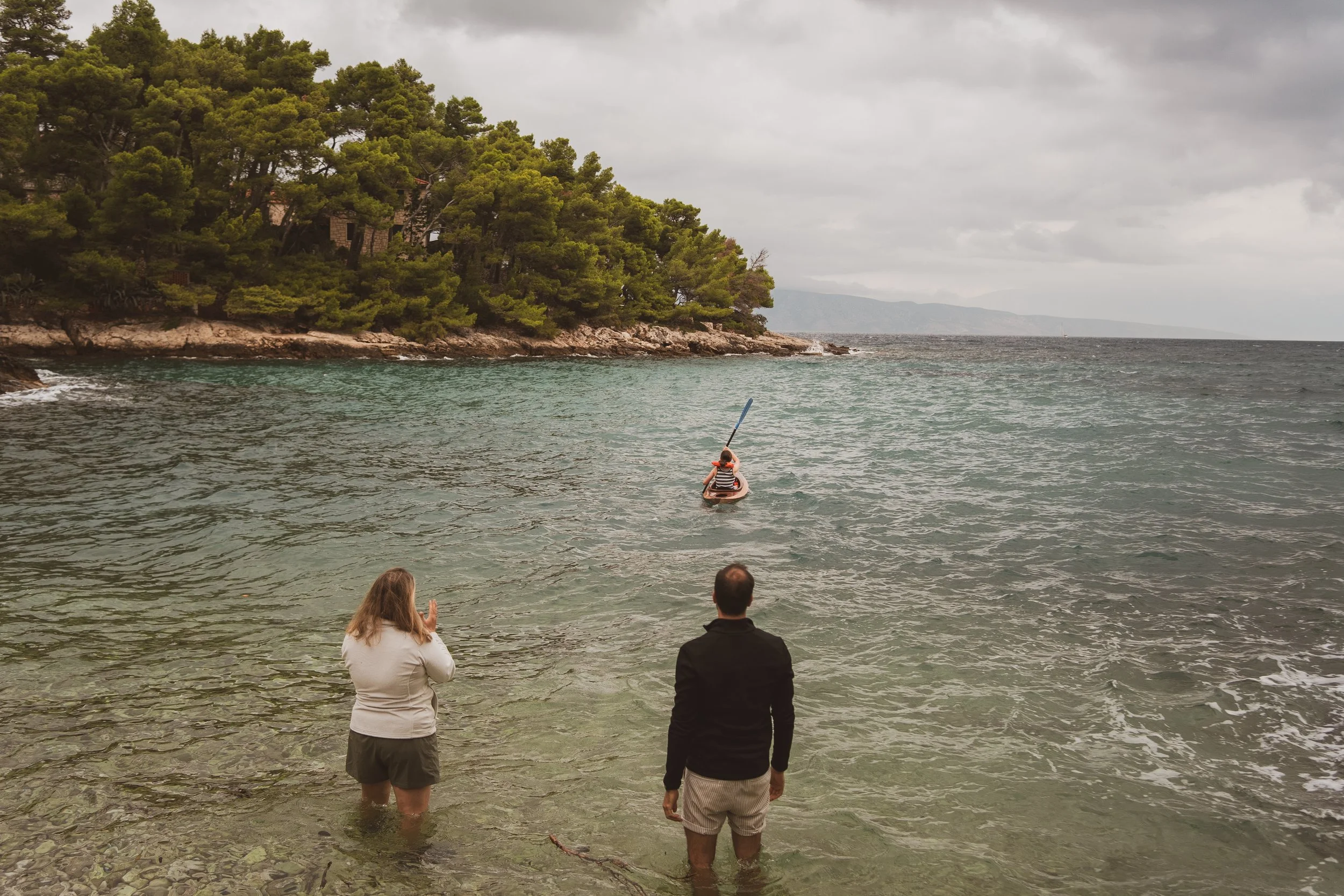
Two afternoons each week have a science focus; two afternoons each week are centered on humanities. All children have a weekly field trip, usually sailing and boating or hiking and climbing. Fridays end in a school assembly. The final Friday of each session is a full-day celebration for parents and children.
In the evening, learners may participate in clubs or extracurriculars, hosted by Field School parents, the School itself, or in the local community. These could include rowing, theater, dance, judo, piano, or other activities.
For more information about our curricula and pedagogy, check out Academics.
Ages & Ratios
The Field School of Hvar serves a maximum of 69 children from age 2 to 18 at any given time.
Early Years serves:
3 children turning 2 to 3. Children must be potty-trained. Parent attendance is optional and based on the child’s comfort with separation.
6 children turning 4 to 5
12 children turning 6 and 7
These groups will have one teacher leading all subjects.
Lower Primary serves:
16 children turning 8 and 9
16 children turning 10 and 11
These two groups will share a teacher for language and humanities and a teacher for math and science.
Upper Primary serves:
8 children turning 12 and 13
8 children turning 14 and 15
These two groups will also share a teacher for language and humanities and a teacher for math and science.
Drop-off and Locations
Drop off is at the Field School’s Learning Center in the Fontana Resort (see more about accommodations). It is a 220sm classroom with a wraparound terrace overlooking the sea. There is a coworking space for parents adjacent to the Learning Center.
The Field School mostly takes place outside on beaches, forests, orchards, and in our local villages. It is important that both children and parents are comfortable with natural environments, including insects, water, rocks, and weather.
Field trips take place in beaches, farms, and historical sites that are not within walking distance of the Fontana. The Field School works with trusted transportation partners for water and ground transportation.
Sessions and Themes
The broad themes of the academic year sessions are as follows:
Fall 2026: Prehistory is our theme in the humanities and biology in science. Fall is the busy harvest period for grapes and olives, as well as Hallowtide. Our outdoor recreation focus will be sailing.
Winter 2027: Ancient Greece is our theme in the humanities and categorization in science. Winter is a season for artisanship and arts. It includes Carnival, the beginning of Lent, and the first blossoms of the year. Our outdoor recreation focus will be rowing.
Spring 2027: Ancient Rome is our theme in the humanities and anatomy in science. Spring is the season of planting, of Easter, and a profusion of wild plants. Our outdoor recreation focus will be hiking and climbing.
More about themes and projects to come in January 2026.
